
Going off the grid
it's the phones, stupid

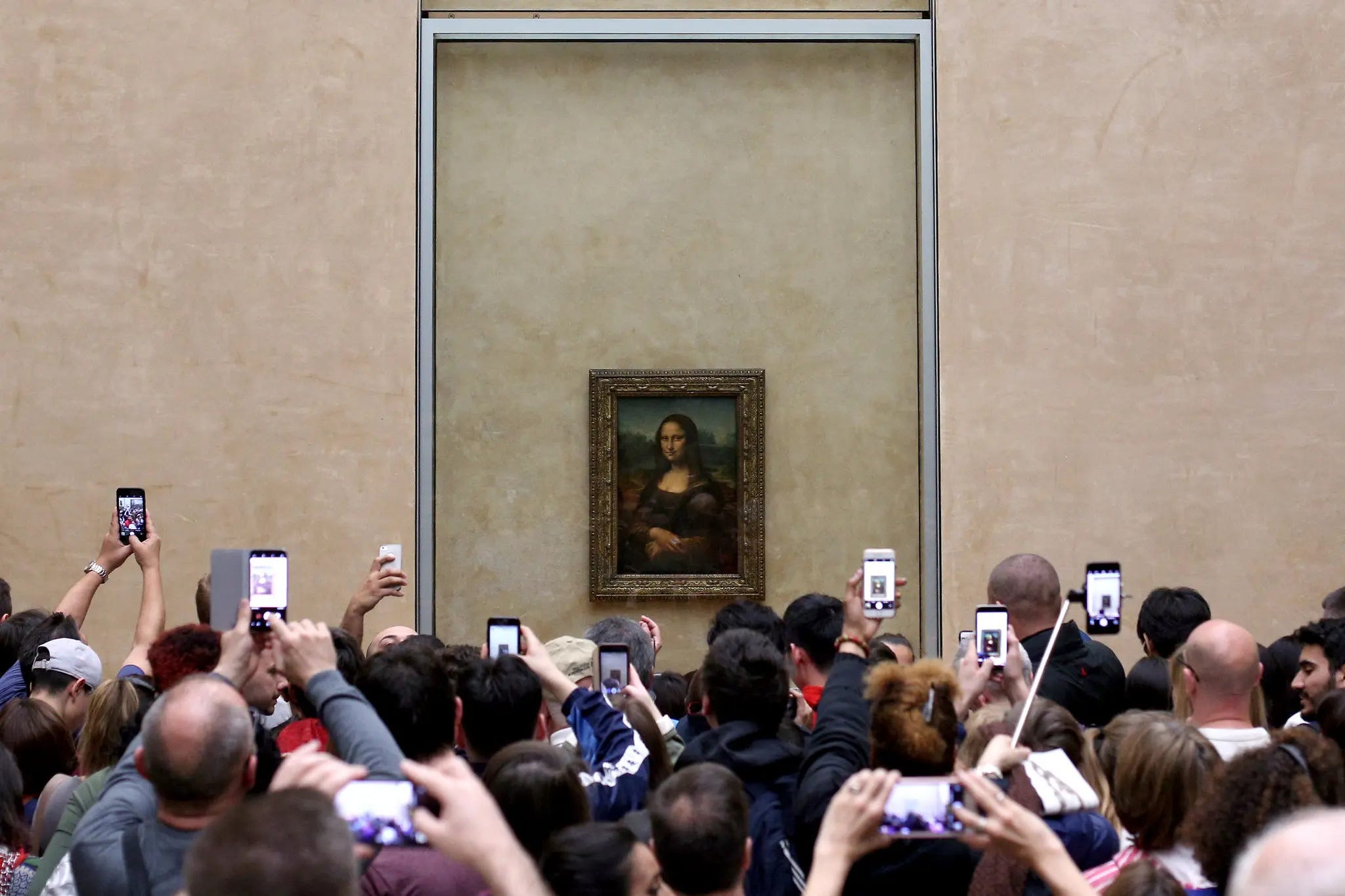
A couple of months ago, I attended an event hosted by a writer who didn’t have a smartphone and held lectures trying to convince people to adopt the flip phone lifestyle. She sold Nokia phones for a steep discount, beers for a slight upcharge, and talked about how getting a “dumb phone” changed her life forever. She had moved away from New York a few months earlier, to rural New Hampshire; she described the city as one big proverbial grid, and wanted to get off it. I didn’t like her analysis, which discouraged moderation and offered only individual consumer choices (throwing away your phone) to solve systemic problems (which she was reluctant to name, besides the brain-numbing effects of staring at your phone all day). If a few million people stopped using their smartphones tomorrow, it wouldn’t change the fact that these corporations already have our data. If we are forced to participate in a digital ecosystem that steals our data and monetizes our consumption habits, I think the fault remains with the people who have created the ecosystem and not those whose lives are ruled by it.
I was sold, though. She’s braver than me for throwing out her phone, and it seems like a worthy cause to devote so much time to showing other people that there is a life to be found without the algorithm. It’s very unlikely that I will get rid of my iPhone and go off the grid permanently, but I see the appeal. I’ve been feeling like I want to disappear for a while.
I stopped using Instagram a few weeks ago, which is not a long time but feels like an eternity. I’m not sure if I’m any happier but I do spend a lot less time scrolling through things that make me unhappy. There were, at any given time, maybe 8-10 people whose stories I was actually interested in looking at, but even knowing this I would spend quite a lot of time every day mindlessly looking at all of them, remembering exactly nothing about the lives of people I went to middle school with or met in the bathroom at a club or old coworkers I only vaguely remember the names and faces of. What could I have done with that time instead?
I wish I could say I deactivated my account as a principled stand against Meta’s recent embrace of the far right or even as an act of self care, but actually I did it after someone I was desperate to be close to told me he liked watching my Instagram stories because he always wanted to know what I was thinking about. I think he meant it as a compliment but I kept wondering why he couldn’t just ask me what I was thinking about if he was so interested. I realize that going dark on social media because I wanted a man to text me more is probably an overreaction; can you tell I’m bad at dating? But if he didn’t want to be an active participant in my life, then why was I giving him passive access to my thoughts? Or anybody, for that matter?
I never got what I wanted, anyway. He saw me more as an entertaining stream of content he was attracted to than as an actual person, and when things became more complicated for him than the easy one-way relationship he had envisioned, he split. Many such cases. A week into my leaving Instagram, I reactivated my account to view a restaurant’s menu on their page and then discovered you can only deactivate your account once a week, so I had to wait out the full 7 day period to get rid of it again. That week I looked at the app a few times before finally deleting it off my phone. I saw that a girl I had talked to maybe three or four times total in college got engaged and to my immense shame, I found a way to make it about myself, an impulse that makes me glad I realized that app is not for me. I’m happy for her but I wondered why I was receiving major life updates from someone I had basically no relationship with or connection to. When Instagram finally let me deactivate my account again I felt relieved of the burden of having to be happy for people whose lives I had too much information about.
I think it’s possible I will reactivate my account at some point in the future, but I feel so relieved not knowing what people are doing all the time now. I’m not receiving daily updates on how often anyone is going to fabulous parties or who is getting married or who is on vacation in Italy, which means I have to assume that everyone else is doing those things along the same timeline I am. I never felt that way when I was scrolling, feeling like I was having less fun and had my life less together than everyone else. I think we should all know less about each other. I’m open to whatever people choose to actively share with me (please, tell me how your day is going) but otherwise I really cannot handle the burden of knowing.
Throughout the course of your life you meet so many different kinds of people, the vast majority for impossibly short amounts of time. The ephemerality is special—as they are a bit player in your world, you’re a bit player in theirs, and they enter and exit by chance. When you become close to someone you are choosing where you want to be involved. There are more than eight billion people on this planet and you will only ever know a tiny sliver of them, but we get to decide who we are invested in. How empowering! When you’re online you don’t get many choices. When you follow someone you become artificially tethered to them, and your whole life is content for them, as theirs is for you.
On the Internet these days it feels like everyone feels entitled to all things, at once, for free and at no cost to themselves. On Twitter where everyone is a friendless idiot, daily discourse varies between how 6-month age gaps in relationships are problematic and how Instacart drivers who buy a different brand of cheese than the one you were expecting should be executed and how it should be the law to receive love and affection from everyone on earth despite not giving anything in return. Twitter never gave me any of the anxiety Instagram did, although I’ve only realized this recently after trying to unsuccessfully delete my account a million times. Because most of the people I followed on Instagram were people I met in real life, I felt imprisoned because it felt like that’s where life was happening, and the business of living was increasingly akin to being marketed to. Twitter is where I have fun because everything there is stupid and none of those people are real to me, besides my actual real-life friends, whose posts I love and cherish. Why would I feel envy over AI-generated slop, or myopic Brooklyn writers getting upset over something that 10 people in America care about, or 14 year olds declaring age gaps problematic even though they have yet to have their own first kiss? These people are losers and we all know it!
Other than my incessant need to compare myself to others lessening a bit, I feel more present in the world. There is no need for me to turn anything I see or do into content so I can do whatever I want to without worrying about how other people are going to perceive it online. I don’t know how anyone is doing things anymore and I have nothing to compare myself to, so I can just relax into whatever feels most intuitive for me. Have you ever felt that way? It’s so freeing! I think I used to feel this way as a child but the life of a little girl has its own hardships: no money, no autonomy, unrelenting supervision (pour one out for us survivors of helicopter parenting), having to experience everything for the first time, not knowing who you are. I know who I am now so I have the privilege to listen to my gut sense of how to be in this world. I wish that for everybody. Let yourself follow your own intuition. It’s probably pretty good!
It doesn’t matter whether I’m not looking at Instagram, though, I suppose it’s too late. Like I said, individual solutions don’t solve systemic problems. Meta already has my data and they’re not doing anything good with it. The infrastructure that these tech companies built remade the world we live in, and it doesn’t seem like we got much out of it besides lower attention spans and a growing loneliness crisis. We haven’t achieved universal literacy but we do get to have unending discourse about whether ordering delivery is ethical (tl;dr: probably not but most people are probably going to do it anyway, tip your delivery people well and at the very least, don’t do it during a natural disaster). If this is the “expansion of life” and “vitality” and “higher well-being” that Marc Andreesen was envisioning in his Techno-Optimist Manifesto, I’ll pass, thanks.
I’m aware that I am working out my own complicated feelings about the digital ecosystems that are on yet another platform owned by a tech company that is probably stealing my data as we speak. Recently I read Ed Zitron’s excellent essay on how the digital world is so fucked, and like him, I’m angry. I’m angry that we’re at the mercy of these tech companies who created an entire ecosystem that could have been empowering and instead became a nightmare. Nothing works and everything is designed to sell something to you, or to spy on you, or to propagandize you. The less money you have the worse all of these dynamics become. And the more time passes the less consumer protections we have. Maybe we never had any but the powers that be used to have some plausible deniability about the whole thing, which seems quaint in retrospect.
But it’s not 2012 anymore and Donald Trump is going to be president again, which is big glaring confirmation that there is no plausible deniability about anything anymore. Back in September, the DHS signed a two million-dollar contract with Israeli spyware firm Paragon. What for is still unclear, but the contractor’s flagship product, Graphite, is used to hack encrypted messaging apps like Signal or Telegram.
Phone-hacking software is getting cheaper; while the White House is playing coy about what they’d like to use that technology for, I’m sure we will find out eventually to disastrous effect. I bet the Biden administration must feel very proud of themselves, expanding the logic of the Global War on Terror to conduct a genocide in 4K, and then compromising the safety and privacy of American citizens by shoveling money towards Israeli defense contractors, only to lose an eminently winnable election and hand Donald Trump the ability to go after anyone he doesn’t like on a silver platter.
Over the past few months, ICE signed over $20 million in contracts for spyware and surveillance technology, which puts them in a good position to carry out the mass deportations Trump ran on. The Democrats did not do anything of consequence during the two month-long lame duck session that they had to prepare for this outcome, which will probably surprise few people reading this. Many of them have decided to go all in on the deportation machine—the Laken Riley Act already passed the House with a number of Democrats voting in favor, and it will probably pass the Senate too. It’s unclear to me what those Democrats even think their purpose is as elected officials if they’re just going to roll over and die now that they’ve lost, but I guess we knew what these people thought about us anyway. So that’s it, then: ramp up the surveillance state just in time for a new president to use it on migrants and American citizens alike at his discretion. It’s never been a better time to get off the grid. I’ll let you know if I ever have the courage to do it.