
Scenes from an American living room
The big game, or whatever

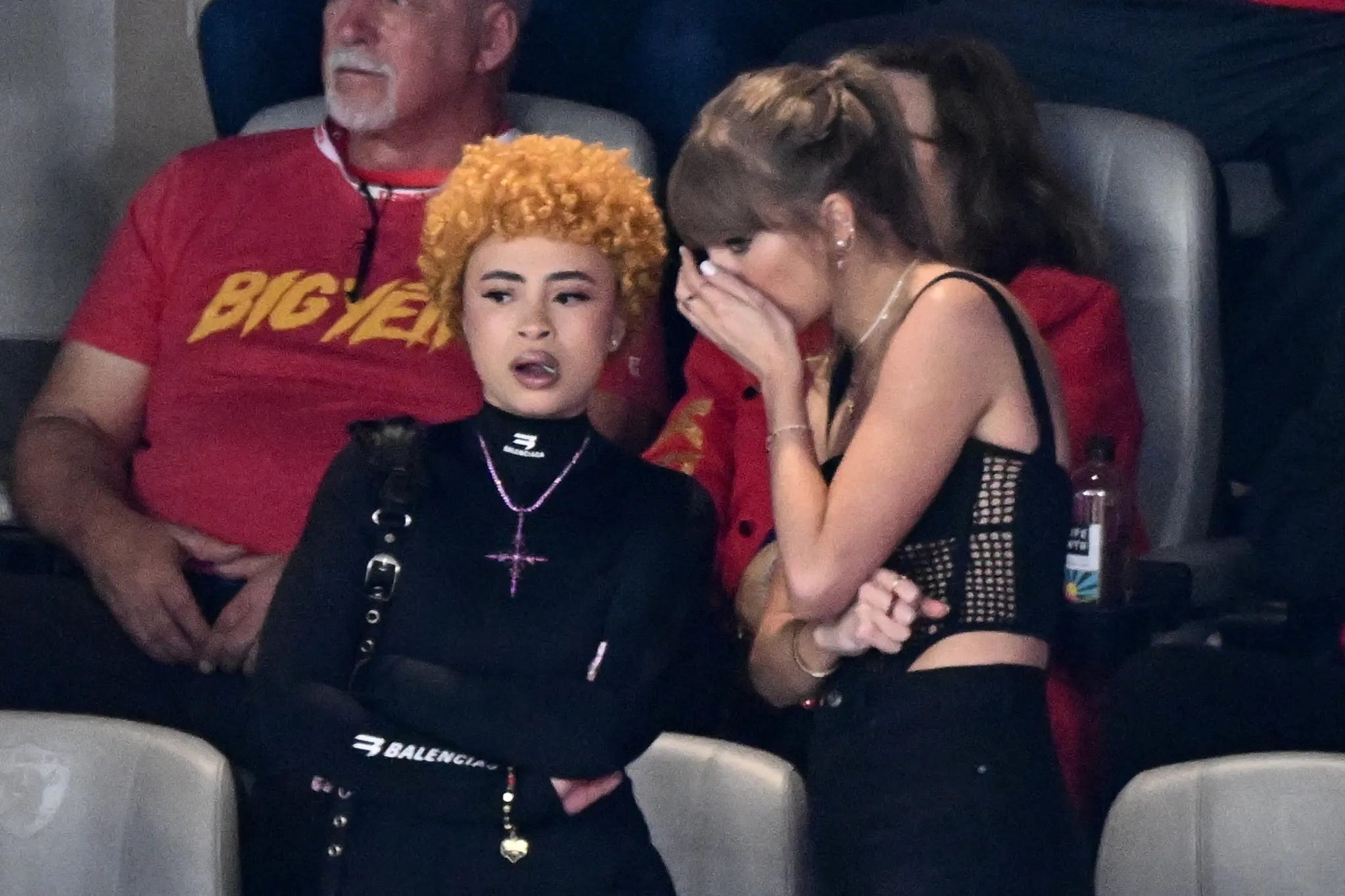
On Sunday night I watched the Super Bowl with my friends. I have only a very basic understanding of the rules of football, and I find it really boring, but I still watch it every year. I guess I feel like it connects me in some way to this vast country, to millions of people I have virtually nothing in common with except for this one day a year that we all crowd around our television screens watching grown men give each other brain damage. There are lots of things like this I hold onto, especially since moving to New York, because I feel like if I don’t make an effort then I won’t be able to understand America and then I’ll be too far gone down the rabbit hole of being an elitist East Coast hipster intellectual cultural worker. I miss living in a monoculture, although I suppose if I’m being honest with myself it probably doesn’t really make a difference and we weren’t any better off back then.
The watch party I attended probably looked a lot like yours: friends sitting around the living room, drinking beers, eating good food that isn’t very good for you, yelling at the screen, laughing a lot, enjoying each other’s company. I invited my British friend who had never seen an American football game before, and I did a pretty bad job explaining the rules to her but I don’t think she held it against me. We all debated whether or not Travis Kelce is hot. One friend kept talking about his “parlay”, which he explained to me more than once but, gun to my head, I could not tell you what it was except that he won a couple hundred dollars from it. I giggled every time they cut to Ice Spice inexplicably hanging out in Taylor Swift’s box. More than 123 million people tuned in nationwide, making this year’s Super Bowl the second-most watched television broadcast in American history. The first was the Apollo 11 moon landing.
Israel’s decision to bomb Rafah, the last so-called safe place in the Gaza Strip where 1.5 million besieged Palestinians have been sheltering with nowhere else to flee, on Sunday night when hundreds of millions of Americans whose tax dollars pay mostly for bombs were all watching this stupid game on television, is one of the most sickening things I’ve witnessed in my lifetime full of sickening world events. I don’t think it’s as clear-cut as what people have been saying on the Internet, that they timed their offensive just to coincide with the Super Bowl and that otherwise the American people would’ve risen up in opposition or something. But there is no more blatant example of how the patterns of consumption that distinguish the American quality of life are not in a vacuum, and that there is a direct relationship between how we get to live and how the rest of the world pays for it.
Israel knows this quite well; that’s why they spent $7 million on a commercial in a foreign country advertising their war crimes to the people who bankroll them. Temu, the Chinese e-commerce site famous for ultra-low prices and alleged slave labor, knows it too; the tens of millions they spent on Super Bowl ads this year pale in comparison to the billions in profit they’ll generate from Americans buying things they don’t need just to feed their thirst for dopamine, horrific labor practices be damned. The tagline in their commercial was “shop like a billionaire”, which really tells you everything you need to know.
I don’t know what we’re supposed to do with all of this. I’m not necessarily saying Americans should stop watching football. It’s hard to tell people not to enjoy things, although truthfully people enjoy a lot of really stupid things and they deserve to be shamed for it. I think successfully getting the public to change their consumption habits is much a more difficult organizing goal than the scolds on Twitter make it out to be, which is why when it works it’s extraordinary. BDS is a powerful example of organizing around consumption that has actually produced results. PACBI, the cultural and academic boycott of Israel, is another good example. Boycotts deliver when they’re targeted and specific, but there is certainly something to be said for thinking through how we live our lives on a much larger scale and being cognizant of how the norms we’re used to have global consequences. I just don’t know how that kind of thinking is scalable without mass political education.
I wasn’t looking at my phone during the Super Bowl, but on my way home a sense of dread and despair slowly crept on me as I saw headline after headline and tweet after tweet and photo after photo of the carnage, until I finally broke down and cried on my neighbor’s stoop for a while. This felt unexpected to me. Over the past four months I’ve developed a numbness to feeling as Israel commits untold horrors in Gaza with impunity and the Palestinian resistance worldwide undergoes heroic sacrifices resulting in little substantive change. I still call my reps and go to protests and give money when I can, and try my best not to give into a type of defeatism I believe is harmful and counterrevolutionary, but even so I’ve stopped being able to feel anything most of the time other than a constant nervousness in the pit of my stomach.
The last time I cried like this was the Friday before Halloween last year, the day that Israel shut off all telecommunications in Gaza and then undertook the deadliest night of bombing thus far. I cried in the Nordstrom Rack where I was trying to find a last-minute costume, I cried on the train, I cried on my walk home, and I cried in front of my roommate and also some strangers. Later that night I said some horribly mean things to a friend because I was mad at him for having a government job during a genocide, and then I cried over that too, not just because I felt bad for taking out my frustration on him but also because I was worried that being angry and sad all the time was making me an actively worse person to be around.
A few months later I can say with certainty that it definitely is. A recurring thought I often have is that the crisis of despair the left is currently facing is a testament to the weakness of our movements, and the American left’s inability to stop our elected officials from funding a genocide shows that we were caught entirely unprepared for this historic moment. It really does feel all the time like we’re collectively throwing things at the wall to see what sticks. I think that makes a lot of people, including me, feel pretty insecure deep down. Everyone lashes out when they’re feeling insecure.
There’s no easy way to fix this other than joining an organization. Mine is the Democratic Socialists of America (I recommend it!), but there are certainly others. In New York I’ve met a lot of people who have read all three volumes of Capital but have never done any kind of organizing. I don’t understand why anyone would do this, not least because attending a canvass is way easier and also more fun than reading Capital! Put the books down and talk to someone!
In writing this I’m also recommitting to returning to organizing after a long hiatus. As a professional class worker in the imperial core I know there is absolutely no other way I should be spending my time, but also I would like to feel optimistic about something for once. Class solidarity is infectious. When you try to build a better world you start to believe it’s possible. I want that back. I want that for you as well.
Hello, friends, and welcome to my Substack. Almost three years ago, I started this newsletter to try to help myself work through the things I was thinking about and find solutions to political questions I hadn’t found good answers to in popular discourse. If you signed up three years ago thinking you were going to get weekly updates from me, I’m sorry that I gave up almost immediately. I can’t promise I’ll do better this time, but I swear I will try harder than I did in 2021.
I know the tone of this newsletter is a bit more casual than what someone who is professionally writing about politics would adopt. I’m not really a writer, and I don’t work in politics anymore, although my current job is adjacent to both of those things. I’m just a girl interested in how we talk and think about politics, very broadly speaking, particularly on the left but not exclusively. If you’ve made it this far, thank you for reading. More soon.